Joey
Kevin the Star StrikerJoey is the Wild Soccer Bunch player whose magic with the ball exists beside poverty, unreliable care, and the constant possibility of being excluded from the game. He lives with his unemployed mother in a van, cannot afford cleats, sometimes lacks even a jacket, and occasionally fails to appear because his mother drinks heavily. Yet when he plays, he transforms the ball into an instrument of wonder, becoming both a remarkable athlete and a vivid reminder that access to sport is shaped by family resources as much as by talent.
Identity and Background
Joey is introduced as the opposite of Kyle, whose family is rich. Joey’s mother is poor and out of work, so the two live in a van. The arrangement gives them mobility, but the apparent freedom of being able to go anywhere conceals housing insecurity and a lack of basic sporting equipment. Joey cannot afford cleats, and his clothing is inadequate even for ordinary life: when Kevin asks him to get changed for practice, Joey points out that his brown wool sweater, checkered pants, and worn sandals are already his soccer gear.
His home life is also marked by neglect and silence. His mother drinks a lot, and Joey never discusses the problem openly. Instead, his pain appears in his face when he presses his lips together tightly. The narrative therefore presents his hardship through both concrete deprivation and restrained bodily expression. Joey is not defined only by misfortune, but the conditions around him repeatedly place his participation in soccer at risk.
Discovery and Entry into the Team
Kevin encounters Joey when the Wild Soccer Bunch urgently needs another player. Joey initially appears wary, especially after realizing that the invitation involves soccer and that he has no suitable clothes. Kevin first jokes about his outfit, then recognizes that Joey’s question about whether he can still play is serious. Joey’s smile disappears when he admits that he has nothing else to wear, revealing how quickly a practical shortage can become a threat to belonging.
Kevin responds by explaining the situation and asking his name. Joey answers simply, and Kevin introduces himself and the Wild Soccer Bunch. This exchange changes Joey’s position from an isolated boy at the edge of the game to a possible teammate. His recruitment is not based on an adult discovering and correcting his poverty; it begins through another child’s immediate need for a player and develops into recognition of ability.
Skill and Playing Style
Joey’s nickname, the magician, describes the effect of his play. When he is on form, he plays soccer like a magician, as though he has placed a spell on the ball. Kevin, who calls himself the master dribbler and Star Striker, admits that Joey can play even better than him. Joey’s ability therefore unsettles the team’s existing hierarchy: the boy with the fewest material advantages may possess the most mesmerizing command of the central object on which everyone’s status depends.
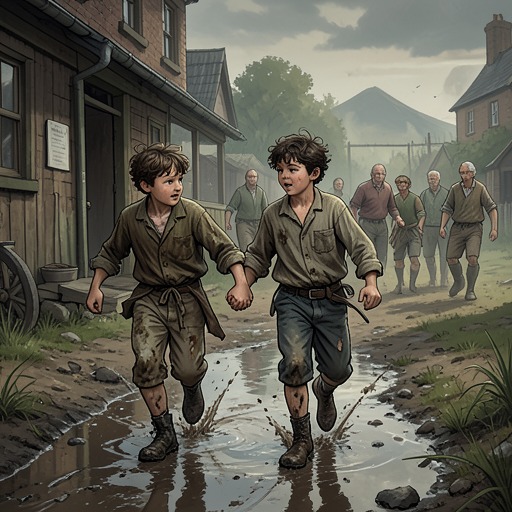
His skill is especially visible during the Wild Bunch’s response to the Unbeatables. After the team suffers a brutal opening, Joey sits with the others on the grass, but anger soon drives him to his feet. The team forms a circle and roars, “ONE, TWO, THREE WILD!” Joey then takes an active role in the renewed attack. He jumps over Mow-down’s legs and passes the ball back to Kevin before Humungous can reach him. The sequence makes his agility and timing concrete: Joey is not merely decorative or inspirational, but a player capable of escaping physical pressure and sustaining coordinated team movement.
Poverty, Care, and Belonging
Joey’s story exposes the unequal material basis beneath the team’s apparent unity. Training depends on equipment, clothing, transport, family supervision, and the availability of adults. Larry works at Larry’s lemonade stand and serves as the team’s coach, while Joey’s mother’s unemployment and alcoholism make regular attendance uncertain. The contrast between Larry’s modest position and Joey’s unstable home life places the Wild Soccer Bunch outside polished institutions, yet the team offers a form of belonging that neither money nor family circumstances reliably provides.
That belonging is not effortless. Joey’s absence can become a practical crisis for Kevin, who promises Larry that the team will be complete again. Finding Joey is consequently both a sporting necessity and a test of whether the Wild Bunch can include someone whose life does not fit the expectations of organized play. Joey’s worn sandals and missing jacket do not disappear when he joins; rather, the team must confront the fact that talent alone cannot supply what poverty withholds.
Conflict and Emotional Force
Joey’s vulnerability is set against the violence of the Unbeatables’ control of the soccer field. When he and Kyle arrive at the field, they find the Wild Soccer Bunch badly beaten in the match: Julian’s eye is darkgreenblueviolet, Tyler is holding his ribcage, and Kevin’s knee is scraped. Mickey has already scored five goals in seven minutes, and the Unbeatables are laughing at their apparent domination. Joey’s careful anger becomes the emotional turning point of the scene. His reaction converts humiliation into collective resistance.
The surrounding world repeatedly treats soccer as something that can be taken away by adults or stronger opponents. Alex receives a grounding and a total soccer ban, while the Wild Bunch loses access to its field and Larry’s stand is destroyed. Joey’s own exclusion is quieter but no less serious: clothing, poverty, and his mother’s drinking threaten to prevent him from arriving at all. His presence on the field therefore carries a double significance. He is fighting the opposing team, but he is also overcoming the social conditions that make participation precarious.
Narrative Role and Significance
Joey embodies the book’s insistence that the Wild Soccer Bunch is formed from contrasting lives rather than uniform privilege. Kyle’s wealth and Joey’s poverty occupy opposite ends of the team’s economic spectrum, yet both boys become part of the same collective game. Joey’s magic makes that equality dramatically persuasive without pretending that the underlying inequality has vanished. The team can welcome him, but it cannot make his missing cleats, van, or mother’s alcoholism unreal.
His playing style also gives material form to a recurring transformation: hardship does not automatically produce virtue, but it can sharpen the stakes of dignity and belonging. Joey’s silence about his home life, his vanished smile when asked about clothing, and his sudden fury when the team is humiliated create a progression from concealed pain to visible action. On the field, he answers exclusion not with an explanation but with movement, timing, and a pass that reopens the match. As the magician, Joey turns the ball into a means of agency; as a child living with poverty and neglect, he shows why that agency matters so urgently.